
Most people think they’re moving toward their goals when they’re actually running from their fears.
You can’t always tell the difference from the outside. The actions look the same because you’re executing, building, showing up. But the energy underneath creates completely different outcomes.
When you’re moving toward what you want, the work feels alive even when it’s hard. When you’re running from what you fear, the work creates pressure even when you’re being productive.
The problem is catching yourself when the shift happens.
Approach Goals Versus Avoidance Goals
Approach goals pull you forward. They’re connected to your actual desires like freedom, connection, impact, mastery. You’re building something because you genuinely want it to exist.
Avoidance goals push you from behind. They’re driven by fear of an unwanted future like failure, poverty, irrelevance, being stuck. You’re building something to escape what terrifies you.
Most people move between the two without noticing. The fear isn’t the problem. The problem is when avoidance takes over as your primary driver and disguises itself as commitment.
How It Hides
Avoidance looks exactly like approach until someone asks the right question.
I was in a coaching session yesterday with my peer coach Collin. I’d been executing hard by messaging people on LinkedIn, creating blog posts, building out systems. All the right tactical moves.
He asked me something simple. “Are you putting pressure on yourself to create your vision?”
Everything hit at once.
I saw the pressure I’d been carrying. I realized it had built up without me noticing. I felt relief that someone could see it and frustration that I’d let a pattern I thought I’d moved past take over again.
I wasn’t building my coaching business because I wanted to connect people and bridge the growing disconnect in our world, the way social media and modern isolation separate us even as we’re more “connected” than ever. I was building it because I was terrified of working an hourly job I hate, barely scraping by financially, stuck in survival mode forever. The “van down by the river” scenario.
I know that future is unlikely. But the image was creating all the pressure.
Why You Don’t Notice
The pattern hides behind productivity.
I had a narrative that sounded good about “building the business.” The pressure felt necessary, like I was finally taking this seriously. All that motion looked like progress toward my goals.
But I wasn’t connected to my vision of connecting people and the world. I don’t have a best friend in town. I haven’t been experiencing my LinkedIn engagement as genuine connection. I was going through the motions of building connection-based work while disconnected from connection itself.
That’s the tell. Running from fear cuts you off from the thing you’re supposedly building toward. Connection requires vulnerability and presence. Fear keeps you performing, executing, protecting, always in motion but never quite present.
The Reinforcing Loop
Avoidance blocks genuine connection. When you’re running from fear, you can’t access the vulnerability and presence real connection requires.
And lack of connection feeds more fear. Without connection to your vision or to actual people, the dream feels abstract. The fear feels concrete. The nightmare scenario feels more real than the vision you’re trying to build.
They reinforce each other until someone helps you see it.
How It Feels
Your nervous system often knows the difference before your mind catches up.
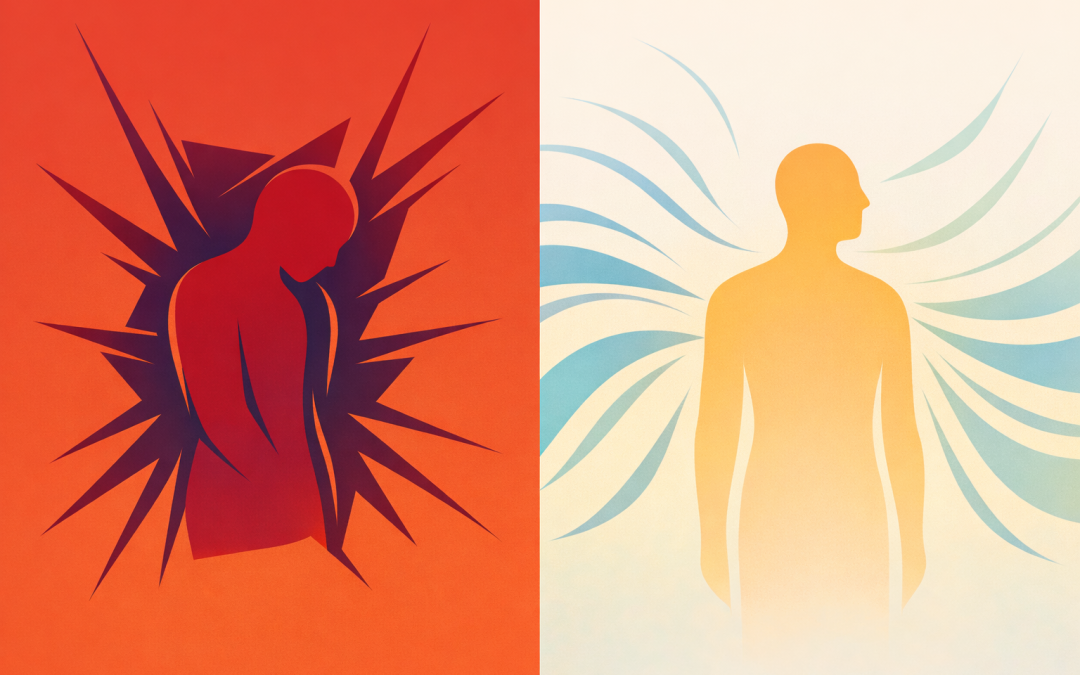
Avoidance creates contraction in your body. Things feel harder, more extreme, more pressured. Your to-do list transforms into boxes you must check off to stay safe, obligations rather than opportunities. The grip tightens. Even when you’re being productive, your body carries tension.
Approach creates expansion. Things feel open, possible, alive. The same tasks that felt like obligations now become ways to facilitate your vision. The grip drops and you can breathe.
After Collin’s question landed, I could feel the shift in my body. The avoidance had been creating rigid edges around everything because each task felt heavy with consequence. When I reconnected to what I actually wanted to create, those edges softened. The tasks didn’t disappear, but they stopped feeling like survival requirements.
This is your most reliable signal. Before you can articulate what’s driving you, your nervous system already knows. Contraction means you’re running from something. Expansion means you’re moving toward something.
The Question That Breaks The Pattern
“Am I putting pressure on myself to create my vision?”
If the answer is yes, check which direction you’re running.
Not because the avoidance is wrong. It kept you alive. It got you this far. But you can’t build something meaningful from that energy long-term.
The shift isn’t about eliminating fear. It’s about recognizing when fear is driving and choosing to reconnect to what you actually want instead.
When you catch yourself, the response matters. Instead of collapsing into shame or identifying with the pattern as “who you are,” you can observe it with curiosity. You recognize how running from fear amplifies the emotional weight of what you’re trying to avoid. You catch yourself and choose differently.
That’s what shifts the pattern. Not perfection. Just the ability to see it and redirect.
Where Are You Running?
Look at the work you’re doing right now. The goals you’re chasing. The pressure you’re carrying.
Ask yourself if you’re putting pressure on yourself to create your vision.
Check your body. Do you feel contraction or expansion? Are your tasks boxes to check off or ways to create what you want?
The actions might look identical. But the answer changes everything.